
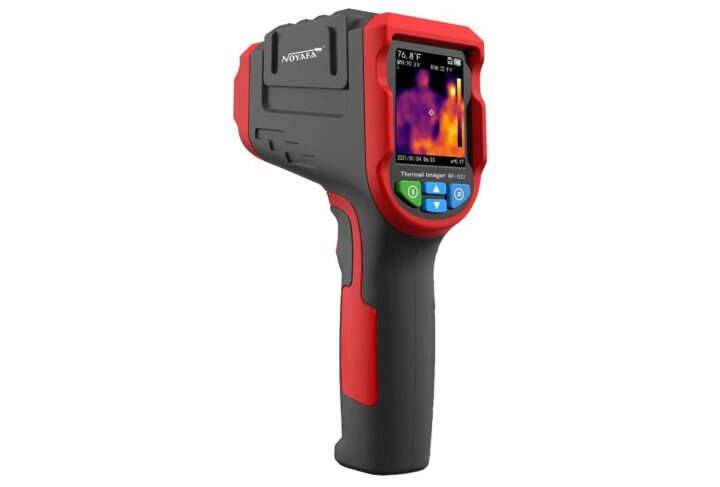
Water leaks are one of the most expensive and deceptive problems a homeowner or building professional can face. By the time moisture becomes visible, stained ceilings, warped floors, crumbling drywall, the damage is already well advanced.
Thermal imaging cameras change that equation entirely. By detecting the subtle temperature differences caused by evaporating water or damp building materials, a good thermal camera lets you find leaks behind walls, beneath floors, and inside ceilings before they become disasters.
In this guide, we review some of the best thermal imaging cameras for water leak detection, covering options from entry-level to professional-grade, so you can find the right tool for your needs and budget.
Top Picks-Summary
Buying a Thermal Imaging Camera for Leak Detection
One should consider the following qualities when looking for a thermal imaging camera that can be used for leak detection.
Sensitivity
One of the most important characteristics that will define a good thermal imaging camera for detecting leaks is a look at the thermal sensitivity that a camera possesses.
The sensitivity of a thermal imaging camera, or NETD (Noise Equivalent Temperature Difference), is a measure of its ability to detect and display small temperature differences. It is the smallest temperature change that the camera can detect reliably.
Sensitivity is expressed in millikelvins (mK) or degrees Celsius (°C). The lower the number, the better the camera detects the subtle temperature drops that moisture creates through evaporation. 30mK, for example, means that the camera can detect as small as a 0.03 temperature difference.
Sensor resolution
A thermal imaging sensor is what captures the infrared energy and transfers it to an electrical signal. The size of the sensor is measured using pixels, denoting the vertical and horizontal size, just like a digital screen. A sensor measuring, say, 320 x 240 pixels is more powerful and displays a better image than a sensor measuring 240 x 180. It will also have better sensitivity
Image quality
You have a higher probability of identifying a leak if you can see the thermal image (thermogram) properly. The quality of the image depends on the capability of the image sensor and also the resolution of the screen displaying the thermogram.
Additionally, the refresh rate of the screen quantifies the number of times the camera updates or regenerates the image displayed on the screen. The refresh rate is typically measured using Hertz (Hz). A higher refresh rate results in a smoother image.
Make sure to opt for a thermal imaging camera with the best image quality, depending on your budget.
User-friendliness
How easy is it to use the thermal imaging camera? You obviously want something with intuitive features, easy to figure out without always referring to the owner’s manual.
Thermal imaging cameras also come in various forms and designs. Some of the designs are more ergonomic than others, but the best way to know what’s good for you is to try out the different options before making a purchase.
Battery
This isn’t much of a problem on most cameras, but if you are intending to use the imager for extended periods, make sure to get one with a long battery life that will serve you until you are done detecting the leaks. Long Battery life is especially important if you are working away from a power source where you can recharge.
Best Thermal Imaging Camera for Water Leak Detection
1. FLIR E8 Pro Commercial Thermal Imaging Camera
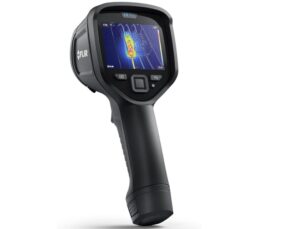
When it comes to professional-grade water leak detection, the FLIR E8 Pro sits at the top of the conversation for a reason. This camera delivers a sharp 320×240 thermal resolution paired with a 5-megapixel digital camera, giving you crisp, detailed images that make pinpointing moisture intrusion behind walls, ceilings, or under floors genuinely intuitive. The MSX image enhancement technology overlays visual detail onto thermal data in real time, so you’re never left squinting at a blurry heat map trying to guess where the problem is.
What sets the E8 Pro apart for leak detection is its exceptional temperature sensitivity, rated at less than 0.06°C NETD. Subtle evaporative cooling caused by hidden water seepage shows up clearly, even when the temperature differential is small. The wide dynamic range and automatic hot/cold spot markers further reduce guesswork during inspections. Add wireless connectivity that lets you push images directly to the FLIR Ignite cloud platform, and you have a tool that keeps your reports clean and professional. For serious inspectors and contractors who need a reliable, high-performance thermal camera for water damage assessments, the E8 Pro is probably the most compelling investment.
Pros
- Exceptional 320×240 resolution for pinpoint moisture mapping
- Sub-0.06°C NETD sensitivity catches even faint evaporative cooling
- MSX enhancement produces sharp, highly readable thermal images
- Wi-Fi and FLIR Ignite cloud for fast professional reporting
- IP54-rated and built for sustained field use
Cons
- Premium price puts it out of reach for casual or DIY users
- Larger form factor than pocket-style alternatives
- Cloud features require an account and internet connectivity
2. Thermal Imaging Moisture Meter
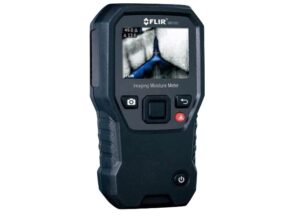
Because this thermal imaging camera was specifically designed for inspecting water leaks it means that it’s perfectly suited for the job. To further enhance its water leak detection capabilities, the manufacturer has incorporated a pinless moisture sensor and an external pin probe that can be used to certainly confirm whether there is indeed moisture in the area being inspected.
Additionally, the camera includes a laser pointer to specifically single out the area being inspected for moisture. This makes this thermal imaging camera a perfect alternative if you don’t need any compromises and are fully specialized in moisture inspection duties. The camera is built rugged, albeit bulky, with chunky dimensions.
It features a rubberized grip on top of a solid housing. The sturdy build makes it a workhorse with no chance of harm on the worksite.
Features
- 7V, 2600 mAh Li-ion rechargeable battery (18 hours runtime)
- 80 x 60 pixels sensor
- Refresh rate: 9Hz
- 320 x 240-pixel display
- Thermal sensitivity: less than 0.15°C
Pros
- Integrated Pinless Sensor and External Pin Probe
- Rugged and durable
- Long battery life
- Laser pointer-guided measurement
- 10-year thermal detector warranty
Cons
- Chunky dimensions.
3. HSFTools F2VW Thermal camera
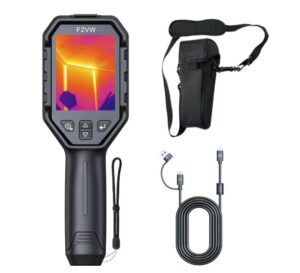
This thermal imaging camera is compact, budget-friendly and packs more capability than its price tag suggests, making it a smart pick for homeowners, property managers, and entry-level inspectors tackling water leak detection. With a 256×192 infrared resolution and a thermal sensitivity of around 0.05°C, this unit can reliably detect the temperature drops caused by evaporating moisture, the telltale sign of water seeping through walls or pooling beneath flooring.
One of its strongest selling points is its dual-sensor design, combining an IR sensor with a standard digital camera so you can overlay thermal and visual images for better context. The full-color display is bright and responsive, and the intuitive interface means you’ll spend less time digging through menus and more time finding leaks.
Battery life is solid, typically delivering several hours of continuous use on a single charge. The F2VW also connects to smartphones via a dedicated app, letting you store, annotate, and share inspection results quickly.
Pros
- 256×192 resolution at a very accessible price
- 05°C sensitivity reliably detects moisture-driven temperature drops
- Dual-sensor image fusion adds helpful visual context
- Smartphone app connectivity simplifies report sharing
- Solid battery life for extended inspection sessions
Cons
- Brand support and warranty coverage less established than FLIR
- Image fusion quality doesn’t match premium-tier competitors
- App can be inconsistent on some smartphone models
4. FLIR C5 Compact Thermal Imaging Camera
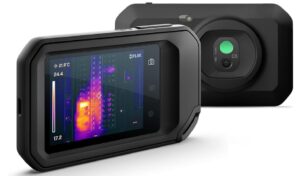
This camera is proof that great thermal imaging doesn’t have to be bulky or complicated. This pocket-sized powerhouse offers 160×120 thermal resolution combined with MSX image enhancement, FLIR’s proprietary technology that sharpens the thermal image by blending in visible-light edge detail. The result is a surprisingly clear picture that makes identifying moisture spots, water intrusion patterns, and hidden dampness far easier than the raw resolution number might imply.
Built specifically with ease of use in mind, the C5 connects to your smartphone via Wi-Fi, giving you access to the FLIR Tools Mobile app for capturing, annotating, and organizing your inspection photos on the spot. The touchscreen interface is responsive and clean, keeping the workflow fast.
For homeowners wanting to do their own moisture surveys, or for professionals who need a lightweight backup tool on the job, the C5 strikes an excellent balance. Its IP54 ingress protection rating adds peace of mind in damp environments, exactly the kind of conditions you’ll face when hunting down water leaks. Small enough to slip into a pocket, yet capable enough to get the job done.
Pros
- MSX enhancement makes 160×120 images far more usable
- Pocket-sized and light enough for all-day carry
- IP54-rated for damp, dusty inspection environments
- Intuitive touchscreen with fast Wi-Fi app connectivity
- Reliable FLIR build quality and after-sale support
Cons
- 160×120 base resolution is limiting for detailed commercial work
- Smaller display can feel cramped during complex inspections
- No video recording capability
5. Thermalmaster Thor 002 Thermal Camera
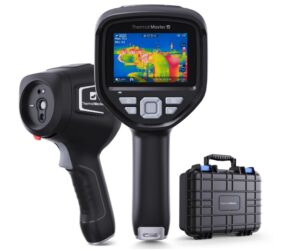
The Thermalmaster Thor 002 is a rising contender in the mid-range thermal camera space, earning attention from property inspectors and restoration teams who want solid performance without paying a premium-tier price. It features a 256×192 infrared sensor with a thermal sensitivity below 0.05°C sensitivity sharp enough to catch the subtle evaporative cooling that wet building materials produce, which is exactly what you need when tracing hidden pipe leaks or moisture wicking through concrete and drywall.
The Thor 002 runs a bright LCD display with a clean, menu-driven interface that makes switching between color palettes and measurement modes straightforward during inspections. Its image fusion mode overlays the thermal layer onto the visual image for context, giving you a cleaner picture of where the problem actually sits in relation to the surrounding structure.
The camera also records video in addition to stills, which is valuable when you need to document moving or intermittent moisture issues. With a solid build quality, reasonable battery performance, and an accessible learning curve, the Thor 002 is a genuinely competitive option for anyone serious about moisture and leak detection work.
Pros
- Strong 256×192 sensor with sub-0.05°C sensitivity
- Video recording capability for documenting dynamic leaks
- Image fusion mode provides clear structural context
- Multiple color palettes suit varied inspection scenarios
- Competitive mid-range pricing with a professional feature set
Cons
- Newer brand with a shorter track record than FLIR
- Software and app ecosystem less mature than established competitors
- Limited availability of accessories and replacement parts
6. FOXWELL RT280 Thermal Imaging Camera
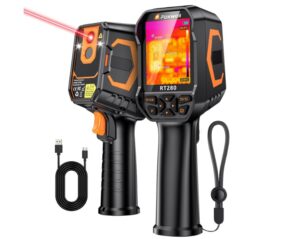
The FOXWELL RT280 is a straightforward, no-nonsense thermal camera that appeals strongly to budget-conscious buyers. With a 256×192 thermal sensor and a thermal sensitivity of approximately 0.05°C, the RT280 delivers enough resolution and sensitivity to identify moisture anomalies behind walls, beneath floor coverings, and around plumbing fixtures, covering the core demands of most home inspection and property assessment tasks.
The built-in 2-megapixel digital camera supports picture-in-picture display, letting you correlate thermal readings with visible-light images in real time. The color display is easy to read, and the RT280 offers multiple color palettes, including iron and rainbow modes that make temperature differences more visually intuitive.
It charges via USB-C, which is a practical modern touch for professionals on the move. The image storage via micro SD keeps data management simple. While it doesn’t carry the brand prestige of FLIR or the advanced feature sets of higher-end tools, the FOXWELL RT280 punches well above its price point and is an honest performer for anyone getting started with thermal leak detection or needing a reliable secondary unit on site.
Pros
- 256×192 sensor with ~0.05°C sensitivity at a budget price
- Picture-in-picture display aids leak location and documentation
- USB-C charging is convenient for field recharging
- Multiple color palettes make thermal contrast easy to read
- Excellent value for beginners
Cons
- No brand prestige or wide service network backing it
- Build quality and long-term durability less proven than FLIR
- Limited advanced features compared to mid- and high-tier options
7. Hti-Xintai Infrared Thermal Imaging Camera
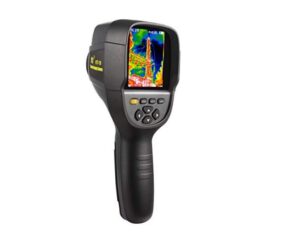
This one stands out for its high resolution, which makes it one of the easiest to read when inspecting for water leaks and other uses.
The camera displays a thermogram with a 320 x 240 resolution on a 3.2-inch display. Additionally, 5 color palettes help distinguish between different temperatures more easily. The 5 palettes are Rainbow, Iron Red, Cold Color, Black and White, or White and Black
Captured footage can be stored on the camera and then transferred at a later time to a laptop via a USB outlet.
Lastly, the camera is lightweight and comes with a sufficient battery able to last the user for 3 hours which is more than enough to carry out most inspections.
Features
- 2” TFT display
- Resolution 320 x 240 pixels
- Temp range: -20℃ to 300℃ (-4°F to 572°F)
- Refresh rate: 9Hz
- Thermal sensitivity: 0.07℃
Pros
- Built-in 3GB memory card
- Takes 2 hours to fully recharge
- Low thermal sensitivity
- High-resolution display
- 5 different color palettes
Cons
- USB cable is of low quality
8. Seek Thermal Compact Thermal Imaging Camera
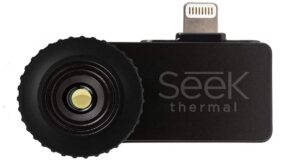
This camera stands out in the entry-level thermal imaging market because it delivers a true 206 × 156 thermal resolution, which is higher than many smartphone-based thermal cameras in its price range.
Designed to plug directly into a compatible smartphone, it transforms your device into a capable thermal inspection tool without the bulk or cost of a dedicated handheld unit. For water leak detection, this higher resolution is a genuine advantage, as it helps reveal the subtle temperature variations often associated with damp drywall, leaking pipes, roof intrusions, and moisture trapped beneath flooring.
The wide field of view also makes it easier to scan larger walls and ceilings efficiently. The camera’s wide temperature range and easy-to-use mobile app make inspections straightforward, even for beginners. While it cannot directly see water, it can quickly highlight suspicious areas that warrant further investigation with a moisture meter.
Features
- 206 x 156 thermal sensor
- Thermal sensitivity: 69 mK
- Temp range: -40°F to 626°F
- 1800ft detection distance
- 9 color palettes
Pros
- True 206 × 156 thermal resolution
- Detects subtle temperature differences effectively
- Wide field of view for scanning large areas
- Lightweight and highly portable
- No battery charging required
- Strong value for water intrusion inspections
Cons
- Requires a compatible smartphone
- No built-in visual camera overlay
- Not as durable as professional handheld units
- Moisture indications require verification with a moisture meter
CONCLUSION
In conclusion, this article reviews the best thermal imaging camera you can use for water leak detection and gives you a variety of options to choose from. From these options, you can be sure of dependability and efficiency in detecting moisture and preventing damage that occurs as a result of sustained leaks.
No matter which model you choose, adding a thermal imaging camera to your toolkit transforms moisture and leak detection from guesswork into a precise, systematic process, saving time, money, and significant structural damage in the long run.
Related