
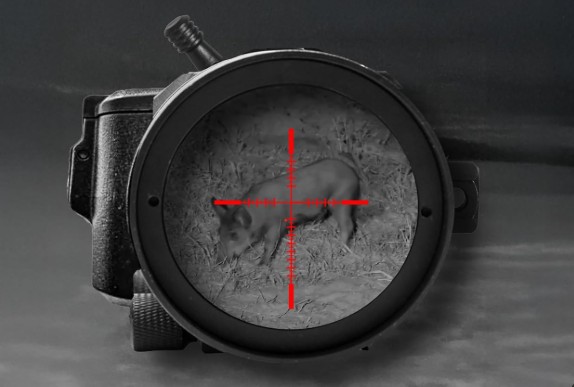
Nighttime hunting presents challenges that traditional optics simply cannot overcome. Darkness, thick vegetation, fog, and changing weather conditions can make it difficult to spot and positively identify game, even with a quality riflescope. That’s where a thermal scope becomes an invaluable tool. By detecting heat rather than relying on available light, thermal optics allow hunters to locate hogs, coyotes, and other predators long before they become visible, giving you a significant advantage in the field.
The .308 Winchester is one of the most versatile hunting cartridges available, capable of delivering accurate and ethical shots across a wide range of distances. Pairing it with the right thermal scope unlocks its full potential for nighttime hunting.
In this guide, we’ve selected some of the best thermal and digital night vision scopes that perform exceptionally well on a .308 rifle.
In This Article
- ATN X-Sight Pro 5-20x
- Oneleaf.ai Mars MT1000LRF
- AGM Global Vision Rattler V2 25-320
- RIX Storm 25-256
- DNT Optics TNC225R 25-256
- Sightmark Wraith 4K 4-32×32
Best Night Vision Scope for 308 -Reviews
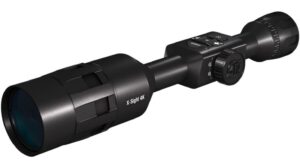
1) ATN X-Sight Pro 5-20x
View on Amazon
The ATN X-Sight Pro 5-20x is an excellent choice for .308 owners who want one optic that performs during the day and after dark. Its digital night vision delivers a sharp image when paired with a quality IR illuminator, making it a practical option for hog, coyote, and predator hunting. The 5-20x magnification also gives the .308 enough flexibility for shots across open fields while still offering sufficient detail at moderate ranges.
Where this scope really separates itself is its smart technology. Features like the ballistic calculator, recoil-activated video recording, multiple reticle options, Wi-Fi connectivity, and onboard video recording make it much more than a traditional riflescope. Hunters who enjoy documenting their hunts or experimenting with different ammunition loads will appreciate these extras. Despite all the technology inside, the interface remains straightforward after a short learning curve.
Although it is not a thermal optic, it offers impressive value for anyone who wants modern digital night vision without stepping into the much higher price range of premium thermal scopes. On a .308 rifle, the X-Sight Pro provides the accuracy, versatility, and features needed for hunting in changing light conditions.
Pros
- Excellent day and night capability
- Smart ballistic calculator
- Built-in video recording
- Long battery life
- Multiple customizable reticles
Cons
- Requires an IR illuminator for best nighttime performance
- Digital zoom loses image quality at higher magnification
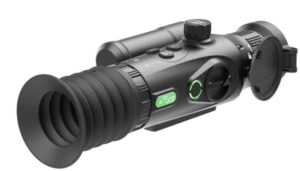
2) Oneleaf.ai Mars MT1000LRF 640 × 512
View on Amazon
The Oneleaf.ai Mars MT1000LRF is built for hunters who want premium thermal performance from their .308. Its 640×512 thermal sensor produces detailed images that make identifying animals much easier, even through fog, light vegetation, or complete darkness. Whether you’re scanning open farmland or wooded terrain, the image remains crisp enough to distinguish targets instead of simply detecting heat signatures.
Its integrated laser rangefinder is one of its strongest selling points. Accurate distance measurements allow hunters to make more confident shots with a .308, especially at longer ranges where holdover becomes important. The scope also offers smooth image processing and responsive controls that help you stay focused when following moving game.
For serious predator hunters or anyone spending many nights in the field, the Mars MT1000LRF delivers the kind of thermal performance that reduces guesswork. It represents a substantial investment, but its combination of image quality, rangefinding capability, and reliable detection makes it a worthwhile upgrade for demanding users.
Pros
- High-resolution 640×512 thermal sensor
- Integrated laser rangefinder
- Excellent long-range detection
- Clear image in difficult weather
- Well suited for .308 hunting rifles
Cons
- Pricey
- Heavier than entry-level thermal scopes
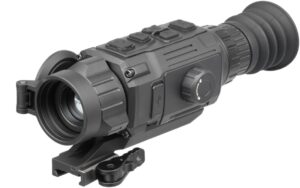
3) AGM Global Vision Rattler V2 25-320
View on Amazon and OpticsPlanet
The AGM Global Vision Rattler V2 25-320 offers an excellent balance between affordability and dependable thermal performance. Mounted on a .308, it provides enough image clarity for predator and hog hunting while remaining compact enough to avoid making the rifle feel overly front-heavy.
Its 320-resolution thermal sensor delivers reliable target detection reaching out to roughly 1,200 meters. The image processing has also improved over earlier models, providing better contrast and smoother viewing during extended hunting sessions. The controls are intuitive, allowing quick adjustments without distracting you from the target. Two removable, rechargeable batteries come standard, each good for around 6.5 hours, so a full night in the field is realistic without an external pack.
For hunters entering the thermal market, the Rattler V2 is one of the easiest recommendations. It covers the essentials well, maintains a reasonable price, and has enough capability to handle most nighttime hunting situations where a .308 excels.
Pros
- Compact and lightweight
- Reliable thermal performance
- Easy menu system
- Good value for money
- Comfortable on medium-sized hunting rifles
Cons
- Lower image resolution than 640 models
- Less detail at extended distances
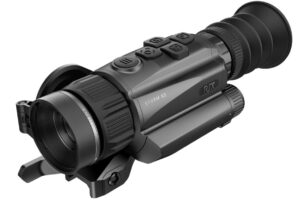
4) RIX Storm Thermal Imaging 25-256
View on Amazon
RIX is a newer name in thermal optics, but the Storm S2 25-256 punches well above its price point. The 256×192, 12-micron sensor is a genuine entry into thermal detection, and RIX’s RET image-enhancement algorithm noticeably sharpens the picture compared to an unprocessed 256 sensor, closing some of the gap with pricier 384-class scopes.
The 25mm Germanium lens gives a 3.5x base magnification good for close-to-mid-range scanning, and targets show up out to roughly 1,400 yards on the 1024×768 OLED display. A 50Hz refresh rate keeps fast-moving hogs and coyotes fluid on screen. Wi-Fi streaming through the RIX+ app, IP67 waterproofing, and a 1000g shock rating mean it’ll handle .308 recoil and a wet night in the field without complaint. Power comes from a swappable 18650 cell running over six hours, and RIX backs the whole thing with a five-year warranty.
Mounted on a .308, the scope performs particularly well for hogs, coyotes, and other medium-sized game at typical hunting distances. The thermal image is clean enough to detect movement quickly, while the lightweight helps maintain good rifle balance during long walks or extended sits.
Pros
- Affordable thermal option
- Compact design
- Simple controls
- Good detection capability
- Lightweight for extended hunting
Cons
- Lower image detail
- Limited long-range identification
5) DNT Optics TNC225R 25-256
View on Amazon
The TNC225R takes a different approach than the rest of this list: instead of choosing between thermal and digital night vision, it gives you both in a single optic. The thermal channel runs a 256×192, 12-micron sensor, while a separate Sony STARVIS 2 digital channel delivers a full-color 1920×1080 night vision picture with its own 5x base magnification and a removable IR illuminator.
Picture-in-Picture mode overlays the two so you can detect with thermal and confirm identification with the sharper digital image without switching views. A built-in laser rangefinder measuring out to roughly 1,100 yards feeds an integrated ballistic calculator, and one-shot zeroing syncs both channels to the same point of impact.
One of its biggest strengths is how quickly it becomes familiar to use. The controls are logically arranged, and the display remains clear without unnecessary distractions. Housed in a magnesium alloy body rated for recoil up to .50 BMG, .308 is well within its comfort zone. Battery runtime is around five hours from a swappable 18650 cell.
Pros
- User-friendly controls
- Lightweight construction
- Reliable thermal detection
- Good value
- Performs well on .308 rifles
Cons
- 256-resolution sensor limits fine detail
- Not ideal for very long-range identification
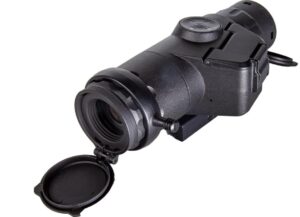
6) Sightmark Wraith 4K 4-32×32
View on Amazon and OpticsPlanet
The Sightmark Wraith 4K 4-32×32 is one of the most versatile digital day-and-night scopes available for .308 shooters. During daylight, it functions much like a traditional riflescope with a bright, detailed image. Once darkness falls, it transitions into digital night vision, allowing hunters to continue using the same optic without changing equipment.
Its wide magnification range makes it suitable for everything from medium-distance predator hunting to longer shots across fields. The high-resolution digital sensor provides a noticeably sharper image than older digital night vision optics, while onboard recording allows hunters to capture successful hunts with ease.
Although it relies on an infrared illuminator rather than thermal technology, the Wraith 4K delivers impressive nighttime performance for its price. For buyers who want one optic that handles both daytime and nighttime hunting with their .308, it remains one of the strongest values on the market.
Pros
- Excellent daytime image quality
- High-resolution digital night vision
- Wide 4-32x magnification range
- Built-in video recording
- Strong overall value
Cons
- Requires an IR illuminator in darkness
- Cannot detect heat through vegetation like a thermal scope
Things to Consider When Buying a Thermal Scope
Thermal Sensor Resolution
The thermal sensor is the heart of every thermal scope, making its resolution one of the most important factors to evaluate. Higher resolutions, such as 640×512, produce sharper images with better detail, allowing you to distinguish animals more easily at longer distances. Lower-resolution sensors like 256×192 or 320×240 are generally more affordable and still perform well for short- to medium-range hunting, but they won’t reveal as much detail when identifying game. If you regularly hunt with a .308 at extended ranges, investing in a higher-resolution sensor will significantly improve your ability to make confident, ethical shots.
Detection, Recognition, and Identification Range
Manufacturers often advertise impressive detection distances, but it’s important to understand what those numbers mean. Detection simply means the scope can sense a heat source, while recognition allows you to tell what type of animal it is, and identification lets you confirm the exact species before taking a shot. For .308 hunting, identification range matters far more than detection distance. Choose a scope that provides clear target identification at the distances you typically shoot rather than focusing solely on maximum detection figures.
Lens Size
The objective lens affects both detection capability and field of view. Larger lenses gather more infrared energy, improving long-range performance and image detail. However, they also narrow your field of view and add weight to the rifle. Smaller lenses offer a wider viewing area, making them better for hunting in thick cover or tracking moving animals. Hunters who primarily shoot across open fields with a .308 may benefit from a larger objective lens, while those hunting in wooded environments may prefer a smaller one.
Base Magnification and Digital Zoom
Every thermal scope combines an optical base magnification with digital zoom. Lower base magnification provides a wider field of view, making it easier to locate moving game, while higher base magnification is better suited for long-range shooting. Excessive digital zoom enlarges the image but can reduce sharpness because it enlarges existing pixels rather than adding new detail. Choosing a scope with a base magnification that matches your typical hunting distances helps maintain the best possible image quality.
Image Refresh Rate
Refresh rate, measured in Hertz (Hz), determines how smoothly the thermal image updates. A 50Hz or 60Hz refresh rate produces fluid motion, making it easier to track running hogs, coyotes, or other fast-moving animals. Lower refresh rates, such as 25Hz, may appear choppier when following moving targets. If you frequently hunt predators or expect quick follow-up shots with your .308, a higher refresh rate provides a noticeable advantage.
Battery Life
Thermal scopes consume considerably more power than traditional optics because they continuously process thermal images. A long battery life reduces interruptions during extended hunts, while scopes with replaceable or rechargeable battery systems offer additional flexibility. Some models also support external power banks, allowing you to continue hunting without worrying about losing power during the night.
Reticle Options
A quality thermal scope should offer multiple reticle styles and colors to suit different hunting conditions. Equally important is the ability to save multiple zero profiles. This feature allows you to use the same scope on different rifles or switch between different .308 loads without having to re-zero each time, saving both ammunition and time.
Durability and Recoil Rating
Not every thermal scope is built to withstand repeated recoil from centerfire rifles. Before buying, verify that the optic is rated for cartridges like the .308 Winchester. A rugged housing, quality internal components, and weather-resistant construction help ensure reliable performance in rain, dust, cold, and rough hunting conditions. A durable scope is more likely to maintain its zero after repeated shots and years of field use.
User Interface and Controls
A thermal scope should be easy to operate, even in complete darkness or while wearing gloves. Simple menus, well-placed buttons, and intuitive controls allow you to adjust settings quickly without taking your attention away from the target. An overly complicated interface can slow your response time when an opportunity presents itself.
Recording Features and Connectivity
Many modern thermal scopes include onboard video recording, photo capture, Wi-Fi, and smartphone connectivity. These features are valuable if you enjoy reviewing hunts, sharing footage, or updating the scope’s firmware. While they don’t directly improve shooting performance, they add convenience and increase the overall value of the optic.
Weight and Balance
Thermal scopes are generally heavier than conventional riflescopes. Mounting an overly heavy optic on a .308 can make the rifle feel front-heavy and more tiring to carry during long hunts. A lighter scope improves comfort, handling, and target acquisition, especially when stalking or covering significant distances on foot.
Budget
Thermal scopes vary widely in price, from entry-level models to premium optics costing several thousand dollars. Instead of choosing solely based on price, consider the features that best match your hunting style. Spending more on a higher-quality sensor, better image processing, and stronger durability often provides greater long-term value than replacing a cheaper scope after a few seasons. Buying the best thermal scope your budget allows is usually the smartest investment for serious nighttime hunting.
Frequently Asked Questions (FAQs)
1. What is the best thermal resolution for a .308 scope?
A 640×512 thermal sensor provides the best image quality and target identification, especially at longer distances. However, a 320×240 or 384×288 sensor offers excellent performance for most hunters while costing considerably less. Entry-level 256-resolution scopes are best suited for shorter-range hunting.
2. How far can a thermal scope detect game with a .308?
Detection range depends on the scope rather than the rifle. Many modern thermal scopes can detect large animals beyond 1,000 yards, while premium models may detect heat signatures at well over 2,000 yards. Positive identification typically occurs at much shorter distances.
3. Is thermal better than traditional night vision for hunting?
For most nighttime hunting situations, yes. Thermal scopes detect heat instead of relying on ambient light or infrared illumination, allowing them to locate animals in complete darkness, light fog, smoke, and sparse vegetation. Traditional night vision still performs well but generally requires an infrared illuminator in total darkness.
4. What magnification is best for a .308 thermal scope?
A base magnification between 2x and 4x is ideal for most .308 hunters. It provides a wide field of view while offering enough detail for medium- to long-range shots. Higher digital magnification is useful when needed, but excessive digital zoom can reduce image quality.
5. Can I use a thermal scope during the day?
Yes. Unlike traditional night vision, thermal scopes work equally well during daylight because they detect heat rather than visible light. This makes them suitable for both daytime scouting and nighttime hunting.
6. Does a thermal scope need an infrared illuminator?
No. Thermal scopes do not require an infrared illuminator because they detect heat signatures. Only digital night vision scopes typically rely on an IR illuminator to improve visibility in complete darkness.
7. Are thermal scopes legal for hunting?
Thermal scope regulations vary depending on the country, state, or local hunting authority. Before using one in the field, always check the laws governing nighttime hunting and thermal optics where you plan to hunt.
8. Will a thermal scope hold zero on a .308?
A quality thermal scope designed for centerfire rifles should hold zero well on a .308. Choosing a scope with a solid mounting system and a recoil rating suitable for .308 Winchester helps ensure consistent accuracy over time.
9. How long do thermal scope batteries typically last?
Battery life varies by model and settings, but most thermal scopes provide between 4 and 10 hours of continuous use. Many newer models feature rechargeable batteries, replaceable battery packs, or support external USB power banks for extended hunting trips.
10. What is the best hunting scope for 308?
For a .308 Winchester hunting rifle, the Leupold VX-Freedom 3-9×40 is one of the strongest choices if you want a scope that is popular, practical, lightweight, and reasonably priced. The 3-9×40 magnification range is particularly well suited to typical .308, It is also lightweight, with the standard model around 12.2 oz, and offers 4.2 inches of eye relief.
Final Thoughts
Hunting after dark is a completely different experience, and having the right night vision or thermal optic can make all the difference. When you can clearly spot, identify, and track game in conditions where the naked eye sees very little, every decision becomes more confident. That’s especially important when hunting with a .308, a cartridge trusted for its accuracy and versatility across a wide range of hunting situations.
Rather than chasing the highest specifications or the most expensive option, focus on finding an optic that matches the way you hunt. Consider the terrain you cover, the typical distances you shoot, and the features you’ll actually use in the field. A well-chosen night vision scope will serve you far better than one loaded with technology that rarely leaves the menu screen.
Related
- Best night vision scope for Foxing
- How to zero a night vision scope
- Best thermal scopes for the money
- Best IR illuminator for night vision scope