
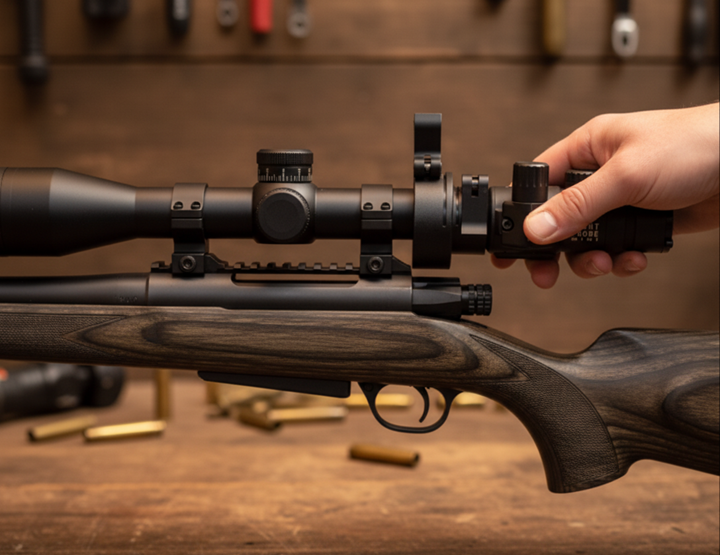
Choosing the right thermal clip-on for your LPVO scope can completely transform how you shoot, hunt, or operate in low-light conditions. These compact thermal attachments turn your daytime optic into a powerful heat-detecting tool, without the need to remove or re-zero your rifle scope.
In this article, we’ll explore the best thermal clip-ons for LPVO scopes, carefully selected for image clarity, ease of mounting, balance, and reliability. If you want to enhance your existing setup instead of replacing it, these top clip-ons offer the perfect mix of performance, convenience, and precision.
Here is a quick recap;
- SIG SAUER ECHO CV25
- AGM Rattler-C V2 19-256
- Holosun DRS‑TH Thermal
- Pulsar Krypton 2 FXG50
- Armasight Jockey 320
- Burris BTC35 V2
Best Thermal Clip-On for LPVO Scope – Review
1) AGM Rattler-C V2 19-256
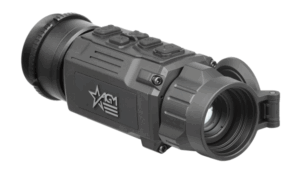
The AGM Rattler-C V2 19-256 is a compact, rugged thermal clip-on that turns your daytime optic into a capable thermal sight with minimal fuss.
It’s powered by a 12 µm VOx uncooled sensor that delivers crisp thermal imaging in complete darkness, fog, or smoke. Its capable of a 1300 m detection range, but this depends on ambient conditions, target size and other factors.
The 50 Hz refresh rate keeps motion smooth, and the OLED display with multiple color palettes provides good target contrast. With up to 11.5 hours of runtime from two rechargeable batteries and optional USB-C external power, it’s built for long nights in the field.
The Rattler-C V2 19-256 also brings modern perks like WiFi streaming, onboard photo and video recording, and a stadiametric rangefinder. It’s IP67 waterproof and shockproof, with a sturdy design that feels purpose-built for real-world use.
While slightly front-heavy once mounted, it remains an impressive, well-balanced thermal solution for hunters or tactical users who want performance without bulk.
Pros
- Excellent image quality from 12 µm VOx sensor
- Long battery life with dual rechargeable cells
- Rugged IP67 build, reliable in harsh conditions
- Built-in WiFi, recording, and rangefinder
- Easy clip-on setup for day scopes
Cons
- Limited detection range for long-distance spotting
- Export restrictions for some regions
2) Holosun DRS‑TH Thermal Fusion Reflex Sight
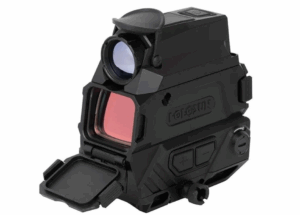
The Holosun DRS‑TH Thermal Fusion Reflex Sight is an ambitious fusion of a red-dot sight and a thermal imaging system in one compact unit, designed for users who need a single optic that works day and night.
It features a 256 × 192 thermal sensor with a refresh rate of 50 Hz, and a digital thermal zoom of 1×, 3×, and 5× alongside the red-dot functionality.
What’s impressive is how seamlessly it transitions between a standard reflex sight during daylight and a fully functional thermal overlay when zero light is available.
The housing is tough, IP67-rated, recoil-resistant for substantial calibres, and mounted gear reports it retains zero even under heavy use.
In practice, close-range engagements under cover of darkness become far more intuitive with this sight. On the flip side, thermal detail begins to soften at longer ranges, and the weight and profile are larger than a simple reflex. But if you want versatility and night capability without switching optics, the DRS-TH is a compelling choice.
Pros
- Dual-mode: full red-dot + thermal imaging in one sight
- 256×192 thermal sensor with 50 Hz refresh and 3/5× thermal zoom
- Robust build: IP67 waterproof, shock-proof, zero retention under recoil
- Flip-between modes quickly; suitable for day or night use without changing optics
- Custom reticle options and thermal colour palettes add flexibility
Cons
- Thermal resolution and range are limited compared to high-end dedicated thermal scopes
- Learning curve for navigating thermal modes and reticle/zoom settings
3) Pulsar Krypton 2 FXG50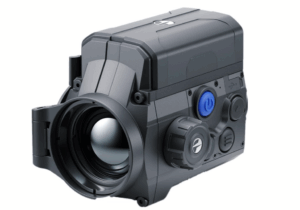
The Pulsar Krypton 2 is a thoughtfully engineered thermal imaging attachment designed to convert your daytime optics into a capable night hunting tool without changing your setup.
With the FXG50 model boasting a 640 × 480 12-µm thermal sensor, a fast F50/1.0 lens and an AMOLED 1920×1080 display, you get sharp, contrasted thermal imagery that holds up in low-light, fog or forest scenarios.
The clip-on design is compact and well-balanced thanks to the magnesium alloy housing and top-mounted battery pack, making it less intrusive when mounted.
The built-in features such as WiFi streaming, video/photo recording, Bluetooth remote control and full-sized battery life of 11 hours add real flexibility for both daytime spotting and nighttime use.
Real-world users appreciate that the unit mounts easily via the proprietary adapter, aligns well with daytime scopes and provides strong detection ranges of up to 2,300 m for human‐sized targets.
Pros
- High‐resolution 12 µm sensor gives strong thermal clarity.
- Lightweight, build with magnesium alloy
- Seamless integration with daytime scopes via adapter.
- Modular design lets you use the unit as both attachment and handheld
- Excellent detection range of up to 2,300 m
Cons
- Pricey
- Requires a compatible day scope
4) Burris BTC35 V2
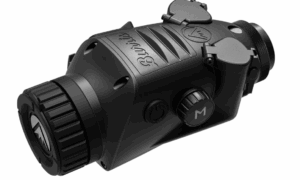
The Burris BTC35 V2 is a compact thermal clip-on scope designed for both hunting and tactical applications. It features a 400×300 VOx thermal sensor with a 35 mm F/1.0 lens, providing a detection range of up to approximately 1,350 meters under ideal conditions.
The device delivers a 50 Hz refresh rate for smooth image transitions and it mounts directly in front of a daytime optic, preserving zero and allowing seamless switching between day and night use.
Built for the field, the BTC35 V2 features a rugged, weather-resistant body (IP67 rating) and user-friendly controls suited for gloved use. It offers multiple color palettes, including white-hot, black-hot, and red-hot modes. You also get different reticle options to adapt to different lighting and environments.
Other features include a picture-on-picture mode, WI-FI connectivity and photo and real-time video streaming, and photo capture capability.
The battery life, however, is average, typically requiring spare power for long operations. Mounting compatibility may also demand additional adapters, and the detection range can vary under dense cover or bad weather.
Pros:
- Clear, detailed thermal imaging for its class
- Clip-on design keeps existing optics usable
- Rugged, weather-sealed, and easy to operate
- Multiple palettes and reticle options
- Video recording.
Cons:
- Average battery life
- May need extra mounting adapters
- Detection range varies in tough conditions
5) Armasight Jockey 320
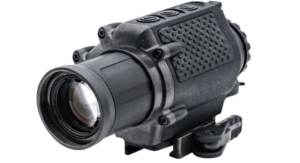
The Armasight Jockey 320 Compact Thermal Clip-On brings night-vision power to your daylight optic with surprising ease and fluidity.
Mounting in front of a standard 1–6× day scope with no re-zeroing required, it transforms familiar gear into a thermal-capable setup without reinventing your rifle. Featuring a 320 × 240 ArmaCORE 12 µm sensor, a crisp 1024 × 768 OLED display, and a 60 Hz refresh rate, the image feels responsive and clear when scanning terrain for heat signatures.
The controls are simple, just three buttons, and you get multiple colour palettes, USB-C connectivity, video/image capture, and a quick-detach mount to streamline your transitions. Built for the field, the unit is rated IP67, operates from –40 °C to +50 °C, and weighs in at around 384 g (without battery).
Battery life sits around 4 hours at 20 °C when powered by two CR123A cells. Ergonomicall,y it’s compact and light enough to jump into optical setups without drastically upsetting balance, yet it retains serious thermal capability for hunting or tactical use.
Pros
- Seamless front-clip attachment to 1–6× day scopes
- Smooth, usable imagery.
- Lightweight at 384 g
- Built-in video/image capture and USB-C output for review or sharing.
- Ruggedised for real outdoor use
Cons
- Battery life is limited in long-duration operations
- Must clip to optics with suitable magnification (1–6×) for best results.
Best Thermal Clip-On Buyer’s Guide
In order to get a scope that effectively meets your needs, these are some of the factors to consider when shopping for a thermal clip-on and the actual thermal scopes.
Sensor Resolution
This is the “eyes” of your scope. A higher-resolution sensor, like 640×480 gives a sharper, more detailed thermal image, great for identifying targets at long range. A lower resolution like 320×240 or 256×192 still works fine for close-to-mid ranges, saving money and battery life. Think of it like choosing between HD and 4K video; both show the picture, but one gives finer detail.
Lens Size and Detection Range
A larger lens gathers more thermal energy, improving detection range and clarity but also adds weight. Smaller lenses are more compact and lighter, ideal for fast-moving hunts. Balance range versus portability based on your needs.
Refresh Rate
Measured in hertz (Hz), this is how smoothly the image updates. A 50–60 Hz scope gives fluid motion and helps track moving targets; 25–30 Hz is acceptable for slower-paced shooting or static observation. If you plan to scan or shoot moving animals, go for the higher rate.
Field of View (FOV)
A wide FOV lets you see more area at once, perfect for close-range hunting or scanning wide fields, spotting multiple heat signatures. Conversely, narrow FOVs give better magnified detail at long range
Battery Life and Power Options
Thermal optics can drain batteries fast. Look for scopes with at least 6–10 hours of runtime or external USB-C power options. Swappable batteries are also a big plus. Longer runtime means extended field use without interruptions, especially during night hunts or surveillance.
Build Quality and Durability
A good thermal scope should survive the outdoors, rain, recoil, and rough handling. Look for IP67 or better water resistance and a sturdy magnesium or aluminum body. If you’re using heavy calibers, recoil resistance matters.
Ease of Use
Simple controls, intuitive menus, and clear reticles make a big difference, especially in the dark. Bluetooth remotes or smartphone apps can also make operation smoother.
Recording and Connectivity
Recording and connectivity in a thermal scope let you capture photos or videos for review, training, or sharing evidence of hunts and observations. WiFi or app connectivity enables live streaming, remote control, and easy file transfer. These features add convenience, documentation, and collaboration without compromising the shooting experience.
Frequently Asked Questions (FAQs)
What is an LPVO?
An LPVO (Low Power Variable Optic) is a rifle scope that combines close-range speed with mid-range precision. It offers variable magnification that shooters can switch through smoothly, usually from 1× up to 6×, 8×, or even 10x. At 1×, it acts like a red dot for fast target acquisition; at higher magnification, it delivers the clarity and precision needed for distant shots
What’s the difference between thermal and night vision?
Night vision amplifies whatever ambient light is available, moonlight, starlight, or artificial sources to produce an image. It struggles in pitch darkness or through smoke and fog.
Thermal imaging, on the other hand, doesn’t need light at all. It reads heat signatures, making it useful day or night and in nearly any weather. The trade-off is that thermal images don’t show visible details like color or texture. You see shapes based on temperature differences.
What Thermal resolution should I choose?
Resolution determines image clarity. A higher resolution, like 640×480, gives finer detail and allows you to identify targets farther away. Mid-range 320×240 sensors are great for moderate distances and cost less, while lower resolutions like 256×192 are suited for short-range scanning or spotting. Balance the resolution you need with your budget because higher resolution is expensive.
Can thermal scopes be used during the day?
Yes, absolutely. Thermal scopes don’t rely on visible light, so sunlight won’t damage them. They work equally well during the day, giving you the same ability to detect heat signatures, useful for spotting hidden animals or tracking people and vehicles.
Are thermal scopes legal for hunting?
That depends entirely on where you live. Some countries or states restrict thermal or night optics for ethical hunting reasons like fair chase laws. Always check local and national regulations before you buy or use one.
What is a thermal clip-on?
A thermal clip-on is a small thermal imaging unit designed to attach in front of your daytime rifle scope. It instantly transforms your regular optic into a thermal scope without needing to remove or re-zero it. That means you can switch between day and night operations easily.
Do I need to re-zero my rifle after attaching a clip-on?
In most cases, no. Quality clip-ons are engineered to maintain zero alignment with your day scope. As long as you mount it properly using the correct adapter, your point of impact shouldn’t shift. It’s still smart to confirm alignment with a quick test shot before serious use.
Related