

Thermal imaging has come a long way. Once reserved for military ops and high-end inspections, it’s now in the hands of everyday pros, homeowners, and hobbyists. In 2026, these cameras are sharper, smarter, and more affordable than ever. We’re talking resolutions pushing 640×480, super-sensitive sensors that spot tiny temperature differences, AI-powered image enhancement, longer battery life, and seamless smartphone integration that makes them feel almost futuristic.
Imagine spotting a hidden water leak before it ruins your walls, tracking wildlife after dark, diagnosing an overheating engine, or checking electrical hotspots, all without breaking a sweat. The best models blend rugged builds with intuitive apps and features
In this roundup of the best thermal imaging cameras for 2026, we’ll dive into top picks across budgets and uses, from pro-grade handhelds to pocket-friendly smartphone add-ons.
Here is a quick summary;
| Thermal Imager | Price |
| Flir One
|
|
| FLIR C5
|
|
| Thermal master p3
|
|
Thermal Master Thor 002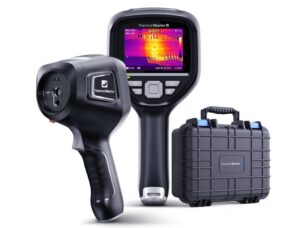 |
|
InfiRay P2 Pro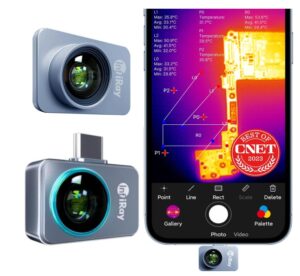 |
|
TOPDON TC002C 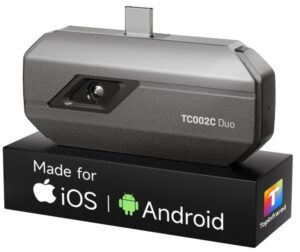 |
Best Thermal Imaging Cameras In 2026 -Reviews
1) Flir One Thermal Imaging Camera
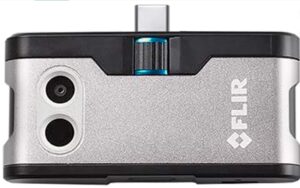
The FLIR One Pro thermal imaging camera for iPhone 15 and newer turns your phone into a powerful tool for spotting hidden issues. It plugs right in, no fuss, and the free FLIR ONE app gets you up and running quickly with live thermal views. The standout feature is the 160×120 native thermal resolution, upscaled to 320×240 super resolution via VividIR processing for noticeably sharper, more detailed images than basic models.
Pair that with MSX technology, which overlays visible light details onto the thermal image, and suddenly, you can easily pinpoint exactly where a hot spot, leak, or cold draft is coming from. It measures temperatures from -20°C to 400°C, making it great for everything from home DIY to pro tasks like HVAC checks or mechanical troubleshooting. The built-in battery lasts about an hour of use, so it won’t drain your phone.
The adjustable OneFit connector works with most cases, and the app offers spot meters, regions of interest, multiple palettes, and even step-by-step inspection guides. Images are crisp, colors pop in the overlays, and it’s compact enough to toss in a pocket.
Pros
- Sharp 160×120 native / 320×240 super resolution with VividIR
- MSX blends thermal and visible for clear problem identification
- Wide temperature range
- Built-in battery doesn’t drain the phone
- Intuitive app with measurement tools
Cons
- Battery life around 1 hour of active use
- Requires app for full features
2) FLIR C5 Compact Thermal Imaging Camera
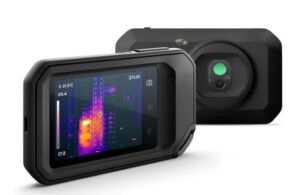
The FLIR C5 is a tough, pocket-sized, standalone thermal camera that’s perfect if you want something reliable without tying it to your phone. It fits right in your hand with a bright 3.5-inch touchscreen that’s easy to use, even with gloves, and includes a handy LED flashlight for dark spots. At its core is a 160×120 thermal sensor that delivers clear, detailed heat maps, along with MSX technology that overlays edges from the built-in 5-megapixel visual camera onto the thermal image, allowing you to instantly identify features such as a leaky pipe or a hot electrical connection.
It measures temperatures from -20°C to 400°C with good sensitivity, and the 1-Touch Level/Span feature quickly auto-adjusts the image for better contrast. Battery life is solid, lasting around 4 hours of use. It charges via USB-C, and Wi-Fi enables you to upload images directly to the FLIR Ignite cloud for backup, organization, and quick report creation.
It’s rugged too, IP54 rated for dust/water, and survives 2-meter drops. Great for home inspections, HVAC work, electrical checks, or DIY troubleshooting. Images look sharp and professional without much fuss.
Pros
- Standalone with built-in touchscreen and 4-hour battery
- Sharp 160×120 resolution with excellent MSX overlay
- Wide temperature range (-20°C to 400°C) and good sensitivity
- Wi-Fi cloud upload to FLIR Ignite for easy sharing/reports
- Rugged, pocket-portable design with LED flashlight
Cons
- Refresh rate is not super smooth for fast motion.
- No video streaming over Wi-Fi
3) Thermal master p3
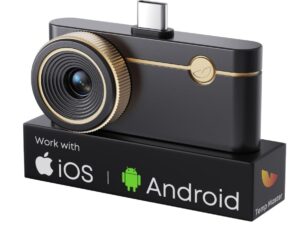
The Thermal Master P3 is one of the coolest little thermal cameras you can plug into your phone right now. It snaps onto your USB-C port and feels like a tiny powerhouse in your pocket. This thing packs a 256×192 sensor, which gets upscaled to 512×384 using smart XIR processing. Images come out surprisingly sharp and detailed.
What really sets it apart is the manual focus macro lens. You can dial in super-close shots for circuit boards or zoom out for room scans. It catches temperatures from -20°C to 600°C with high sensitivity, so even small heat leaks or tiny electrical issues show up clearly.
The Temp Master app is clean and simple. You get to pick from 12 color palettes, zoom up to 15x, measure points/lines/areas, set alarms, and more. It pulls power from your phone, runs smoothly at 25Hz, and the rugged alloy body holds up well.
Pros
- Very sharp images with excellent detail
- Manual macro focus for precise close-ups
- Wide temperature range and high sensitivity
- Tough build and feature-packed app
Cons
- Relies on phone power
- Upscaling can cause minor lag sometimes
4) Thermal Master Thor 002
The Thermal Master Thor 002 is a solid, no-fuss handheld thermal camera that feels built for real work without the high-end price tag. It stands alone with a big, bright 3.5-inch 640×480 IPS touchscreen that’s easy to read outdoors or in dim spots, plus a handy built-in LED flashlight and laser pointer for quick targeting.
At its heart is a 256×192 thermal sensor boosted to 512×384 with XIR super-resolution tech, giving sharp, detailed heat maps. It pairs that with a 2MP visible camera for fusion modes like picture-in-picture or blended overlays, so you can see exactly where a hot spot or cold leak is on the actual object.
The temperature range covers -20°C to 550° with decent accuracy, and sensitivity picks up subtle differences nicely. The 25Hz refresh rate keeps things smooth when scanning, and it records photos/videos to a microSD card. Battery lasts a good chunk of the day, it charges via USB-C, and Wi-Fi/USB lets you send images to your phone or PC for reports. It’s rugged (IP54-rated), making it great for HVAC checks, electrical inspections, home leaks, or even spotting wildlife.
Pros
- Sharp 512×384 upscaled images
- Large, bright touchscreen and long battery life
- Rugged build with IP54 rating, flashlight, and laser
- Easy Wi-Fi/PC transfer and recording features
Cons
- Bulkier and not ideal for very tight spaces
- No macro focus
5) InfiRay P2 Pro
The InfiRay P2 Pro is one of the tiniest thermal cameras out there, seriously, it’s pocket-sized at just 9 grams and super slim, making it the easiest to carry around without noticing it’s there. It plugs straight into your smartphone and uses the free Thermal P2 app to show live thermal views right away. The 256×192 sensor delivers clear, detailed images with a smooth 25Hz refresh rate, no choppy motion when scanning.
It handles temperatures from -20°C to 600°C with good accuracy and high sensitivity, so even small heat changes stand out. A big plus is the included magnetic macro lens for super-close inspectionslike spotting hotspots on circuit boards or tiny components.
From the app, you can choose from multiple color palettes, measure points, take photos/videos, and even overlay your phone’s camera for context. It draws very little power from your phone, and the metal body feels durable.
Pros
- Extremely compact and lightweight
- Sharp 256×192 resolution with smooth 25Hz refresh
- Wide temperature range
- Magnetic macro lens for detailed close-up work
- solid app features
Cons
- No built-in battery
- App can feel basic or have occasional bugs
Thermal Imaging Camera Buying Guide
These are some of the factors to consider in a thermal imaging camera.
Sensor Resolution
This tells you how many thermal pixels the camera has, such as 160×120 or 320×240. Higher resolution means the image will be sharper, and small temperature differences will be easier to see. Low-resolution cameras can look blurry, especially when viewing objects farther away.
Temperature Range
Every thermal camera has a minimum and maximum temperature it can measure. Choose a range that fits your needs. For example, home inspectors don’t need extreme heat ranges, but industrial users or mechanics working with engines and machinery may require cameras that safely measure very high temperatures.
Thermal Sensitivity (NETD)
Thermal sensitivity describes how small a temperature difference the camera can detect. A lower NETD value means the camera can pick up finer temperature changes, producing clearer, smoother images. This becomes especially important in situations where temperature differences are very small or in cooler environments.
Field of View (FOV)
Field of view determines how wide an area the camera can see at once. A wide FOV is great for scanning rooms or landscapes, while a narrow FOV is better for focusing on distant objects. Choosing the right balance depends on whether you work up close or at longer distances.
Refresh Rate
Refresh rate measures how often the image updates per second. A higher refresh rate makes movements appear smoother, which is helpful when scanning moving targets or when you’re walking. Lower rates can look choppy but may still be fine for slow, steady inspection work.
Display Quality & User Interface
A clear display and simple controls make a big difference in real-world use. A sharp screen helps you interpret thermal details more easily, while an intuitive interface ensures you can adjust settings quickly without digging through confusing menus when time matters.
Battery Life
Thermal cameras use more power than normal cameras, so battery life really matters. Longer battery life means fewer interruptions during work or outdoor use. If you’ll be using the camera for long sessions, look for models with replaceable batteries or quick-charging options.
Durability & Weather Protection
If you’ll be using the camera outdoors, on job sites, or around machinery, durability becomes important. Models with rugged housings, drop resistance, and water or dust protection will last much longer and stay reliable in tough environments like construction sites or field work.
Storage & Connectivity
Consider how the camera saves and shares images. Features like internal memory, SD card support, Wi-Fi, Bluetooth, or USB transfer make it easier to store, review, and send thermal photos or reports. This is especially useful for professional inspections or documentation.
Frequently Asked Questions (FAQs)
Can thermal cameras see through walls?
No. Thermal cameras cannot see through solid walls. They only detect heat on the surface. However, they can sometimes reveal hidden issues like missing insulation, trapped moisture, or overheating wires because those problems change the wall’s surface temperature.
What’s the difference between thermal imaging and night vision?
Night vision amplifies existing light, so it still needs some light to work. Thermal imaging doesn’t need any light at all; it detects heat. That’s why thermal cameras work perfectly in complete darkness, smoke, fog, or light brush.
Related