
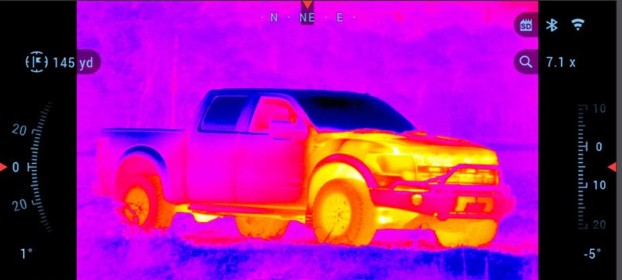
Thermal binoculars open up a whole new world after dark, letting you spot heat signatures where the eye and even night-vision can’t. With the right pair, you can easily pick out movement through brush, fog, and complete darkness, revealing details you’d normally miss.
But not all thermal binoculars are created equal. Some are designed for long-range detection, while others focus on comfort, image quality, or handy extras like video recording and app connectivity.
In this guide to The Best Thermal Binoculars, we’ll sort through the noise and highlight the models that truly deliver in the real world. Think clear images, reliable performance, and solid value for your money.
Here is a quick summary;
- AGM Global Vision ObservIR LRF 25-256
- Pulsar Merger LRF XT50
- ATN BinoX 4T, 2.5-25x
- Guide Sensemart TN Series
Best Thermal Binoculars 2026 – Reviews
1) AGM Global Vision ObservIR LRF 25-256
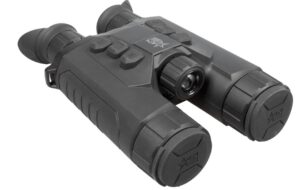
The AGM Global Vision ObservIR LRF 25-256 is a dual-spectrum binocular that combines thermal imaging and digital day/night vision in one durable device. It is designed for a variety of uses, such as hunting, wildlife observation, and security use, allowing you to detect heat first and then clearly identify what you see.
Thermal Imaging Performance
The thermal channel uses a 256×192 resolution sensor with a 12μm pixel pitch and a fast 50Hz refresh rate. This provides smooth, clear heat images. The 25mm lens allows reliable detection of people or animals up to about 1,200 meters away, even through light brush, fog, or complete darkness.
Digital Day/Night Vision
The digital channel features a 4K ultra-low light sensor (3840×2160 resolution). It shows full-color images in bright daylight and sharp black-and-white images at night. A powerful built-in IR illuminator extends visibility when there is no ambient light.
Laser Rangefinder and Ballistics.
The built-in laser rangefinder measures distances accurately up to 1,000 meters. It includes basic ballistic features to help calculate holdover for better shot placement.
Additional Features and Build
You get up to 4x digital zoom, picture-in-picture mode, multiple thermal color palettes, onboard photo and video recording to 64GB internal storage, Wi-Fi for transferring files to a phone app, and GPS for location tagging. Battery life reaches up to 8 hours using two removable 18650 batteries, with USB-C charging support. The binocular is IP67 waterproof and dustproof, built to withstand rain, dust, and rough handling.
In practice, the dual channels work well together. Use thermal to quickly detect targets, then switch to digital for clear identification. The 256 thermal resolution is sufficient for most situations, though higher-resolution models (384 or 640) offer more detail at very long ranges. Overall, it provides strong performance and excellent value for a dual-spectrum binocular.
Pros
- Dual thermal and 4K digital channels for 24/7 use
- Smooth 256×192 thermal imaging with 50Hz refresh rate
- Built-in 1,000m laser rangefinder with ballistic support
- 8-hour battery life, 64GB storage, Wi-Fi, and GPS
- Rugged IP67 waterproof and dustproof construction
Cons
- Heavier than single-mode monoculars (around 2 lbs)
- Significant cost for entry-level thermal binoculars
2) Pulsar Merger LRF XT50
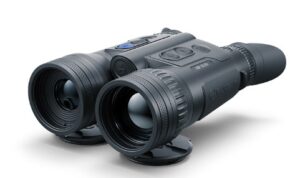
The Pulsar Merger LRF XT50 is a premium thermal imaging binocular that sets a new high standard for hunters and serious observers. It combines a top-tier 1280×1024 resolution thermal sensor (12µm pixel pitch, <40 mK NETD sensitivity) with a powerful 50mm F1.0 lens, delivering incredibly sharp, detailed heat images even at high zoom levels or in tough conditions like fog, rain, or low contrast.
Thermal Imaging Performance
The HD sensor provides exceptional clarity and detail, making it easy to spot and identify animals at long distances. Detection reaches up to 2,300–2,500 meters (depending on conditions), with smooth performance thanks to the fast refresh rate and first-in-Pulsar digital image stabilization a game-changer for steady views at 16x magnification without hand shake blur.
Field of View and Magnification
It offers an unmatched 17.5° wide field of view at base 2x magnification, letting you scan vast areas while maintaining sharpness throughout the zoom range, perfect for open fields or tracking fast-moving game.
Laser Rangefinder and Extras
The built-in laser rangefinder measures up to 1,500 meters in single or continuous scan modes. You get multiple color palettes, photo/video recording to 64GB storage, Wi-Fi for app connectivity (Stream Vision 2), and onboard features like picture-in-picture.
Build and Battery
The ergonomic classic binocular design reduces eye fatigue for long sessions, and it’s rugged with an IPX7 waterproof rating. The dual-battery system provides up to 8–11 hours of runtime. Users call it one of the best thermal binos available, praising the stunning image quality, stability, and all-around performance, though it’s a serious investment for premium features.
Pros
- Ultra-sharp 1280×1024 HD thermal images with excellent detail
- Wide 17.5° field of view and smooth 2x–16x zoom
- First Pulsar digital image stabilization for steady long-range views
- Built-in 1,500m laser rangefinder and long detection range
- Rugged IPX7 build, 8–11-hour battery, 64GB storage, and Wi-Fi/app support
Cons
- Premium high price
- Overkill for casual or short-range use compared to lower-res options
3) ATN BinoX 4T, 2.5-25x
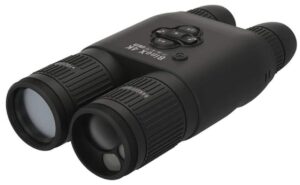
The ATN BinoX 4T 640×480, 2.5-25x Smart is a feature-packed thermal binocular that’s popular among hunters for its all-in-one design. It uses a high-resolution Gen 4 640×480 thermal sensor (with <25 mK sensitivity and 60Hz refresh rate) paired with a 50mm lens, delivering clear, detailed heat images that hold up well for spotting and identifying targets at distance.
Thermal Imaging Performance
The 640×480 resolution provides sharp thermal views with good contrast in various conditions, including fog or light cover. The detection range extends up to approximately 1,950 meters, with recognition capabilities reaching around 800 meters and identification capabilities up to 475 meters (depending on conditions and target size). The wide 2.5x base magnification offers a 12.5° x 9.7° field of view for easier scanning, while digital zoom up to 25x lets you close in on distant details without losing too much quality.
Key Smart Features
The built-in laser rangefinder measures up to 1,000 yards/meters with yard accuracy, and it includes BIX (Ballistic Information Exchange) technology that shares data with compatible ATN scopes (or via app for traditional ones) for quick holdover calculations. You also get smooth zoom, multiple color palettes (black hot, white hot, color modes), onboard photo/video recording to microSD (up to 64GB), Wi-Fi streaming to iOS/Android apps, built-in microphone, e-compass, and GPS.
Build and Battery
It’s designed like traditional binoculars with adjustable interpupillary distance (60-70mm), comfortable eye relief (10-30mm), and weather-resistant construction. The internal lithium-ion battery lasts 16+ hours of active use, with micro-USB charging for field top-ups. Hunters often praise the clear images, long battery life, and smart integration for making night hunts more efficient; however, some note that the design feels dated and that the zoom can soften details compared to premium competitors. It’s a strong, value-driven option for serious users wanting thermal plus rangefinding in one unit.
Pros
- High 640×480 resolution with excellent detail and long detection range (1,950m)
- Built-in 1,000-yard laser rangefinder + BIX ballistic exchange
- Smart features like Wi-Fi streaming, recording, GPS, and e-compass
- Impressive 16+ hour battery life
- Comfortable binocular-style design with interpupillary adjustment
Cons
- Zoom up to 25x can soften image quality at max
4) Guide Sensemart TN Series Handheld Thermal Binoculars
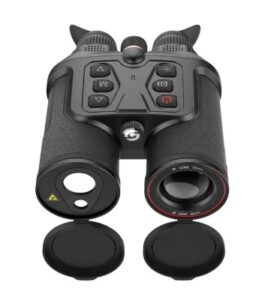
The Guide Sensmart TN430 is a reliable entry-to-mid-level thermal binocular uses a 400×300 resolution VOx uncooled thermal sensor with a 35mm f/1.2 lens, delivering clear, smooth heat images at a 50Hz frame rate, great for tracking moving targets without lag.
Thermal Imaging Performance
The Guide Sensmart TN430 offers reliable detection of a 1.8m human-shaped target up to approximately 900–1,000 meters away, though this range can vary depending on environmental conditions. The field of view is wide at around 11.1° x 8.3°, making it easier to scan open areas.
Base magnification starts at 2.3x, with 1x-4x digital zoom (up to about 9.2x total), and picture-in-picture mode helps zoom in while keeping the full scene visible.
Display and Comfort
It features a sharp 1024×768 full-color OLED display for both eyes, with six color palettes (Black Hot, White Hot, Red Hot, etc.) to suit different environments. The classic binocular design is ergonomic, with adjustable interpupillary distance (60-70mm) to fit most users comfortably and reduce eye fatigue during long sessions.
Laser Rangefinder and Smart Features
The built-in laser rangefinder (LRF) measures up to 600-660 meters in single or continuous modes, handy for quick, precise distance info in the dark. It supports photo/video recording, Wi-Fi for app connectivity and onboard storage. The unit runs on two replaceable 18650 batteries for about 5.5-6 hours of use, with USB-C charging.
Build Quality
The TN430 is rugged with an IP66 waterproof rating, survives 1m drops, and operates from -30°C to +50°C. It’s compact and weighs about 860g (30oz), making it portable for field use.
Hunters and users often appreciate the comfortable viewing, solid image quality for the price, and practical features like the LRF and Wi-Fi. It’s a great value option if you want binocular-style thermal without jumping to higher-resolution
Pros
- Clear 400×300 thermal images with smooth 50Hz refresh
- Comfortable binocular design with adjustable interpupillary distance
- Built-in laser rangefinder up to 600m
- Sharp OLED display, multiple palettes, Wi-Fi/app support
- Rugged IP66 waterproof build and decent battery life
Cons
- Detection range (900-1,000m) is shorter than higher-res models
- Battery life around 5.5-6 hours
Thermal Binoculars Buying Guide
These are some of the things one should consider when buying thermal binoculars.
Thermal Sensor Resolution
The sensor resolution (like 160×120, 320×240, or 640×480) determines how sharp the thermal image looks. Higher resolution means you can see more detail and identify animals or people at longer distances. Lower resolution works for close-range spotting but may look blurry further out. If you want clearer shapes and better identification, go for higher resolution.
Detection and Identification Range
Thermal binoculars usually list how far they can detect heat and how far you can actually identify what you’re seeing. Detection range means you can tell something is there. Identification range means you can tell what it is. Longer ranges are useful for open areas, while shorter ranges are fine for closer work like security or farm use.
Thermal Sensitivity (NETD)
Thermal sensitivity describes how small a temperature difference the binoculars can detect. A lower NETD value means the image will look smoother and clearer, especially in bad weather or when temperature differences are tiny. This helps you see animals or people more easily against warm backgrounds, instead of them blending in.
Refresh Rate
Refresh rate is how often the image updates per second. Higher rates makes movement look smooth, while low refresh rates can look jerky. If you’re tracking moving animals or scanning while walking or riding, a higher refresh rate feels more natural and reduces eye strain over long periods.
Lens Size and Field of View
A larger lens gathers more thermal energy and can improve performance at longer distances, but it also makes the binoculars heavier. The field of view affects how wide an area you can see at once. Wide views are better for scanning large spaces, while narrow views are better for focusing on distant targets.
Battery Life and Power Options
Thermal binoculars use a lot of power, so battery life really matters. Long-lasting or replaceable batteries mean you won’t lose vision in the middle of the night. If you plan long hunts, patrols, or field work, look for models with rechargeable packs, spare batteries, or external power support.
Durability
Because thermal binoculars are often used outdoors at night, they should handle rain, dust, bumps, and cold. Rugged housings and waterproof or weather-resistant designs last longer and stay reliable. If you’ll be hiking, hunting, or working in harsh environments, durability is just as important as image quality.
Weight and Comfort
Thermal binoculars can be heavier than normal binoculars. If they are too heavy, your arms, neck, and eyes can get tired quickly. Comfort features like good balance, ergonomic grips, and adjustable straps make a big difference, especially if you’ll be using them for long periods at night.
Recording and Connectivity Features
Many modern thermal binoculars can record photos or videos, or connect to phones and tablets. This is useful for sharing footage, training, or documentation. Wi-Fi, Bluetooth, or app support can make things easier, but if you don’t need these features, you can save money by skipping them.
Frequently Asked Questions (FAQs)
What’s the difference between thermal binoculars and thermal monoculars?
Thermal binoculars use two eyepieces, so they feel more natural to look through and are usually more comfortable for long periods. They often offer better depth perception and stability, but are heavier and more expensive. A thermal monocular has one eyepiece, is smaller, lighter, and easier to carry, but can be a bit harder on the eyes during long viewing sessions.
Are thermal binoculars legal for hunting?
The legality of using thermal binoculars for hunting depends on local laws. In some places, they’re allowed for spotting, while in others, they may be restricted or completely banned, especially for certain animals or seasons. Always check current hunting regulations in your state or country before using thermal gear in the field to avoid legal trouble.
Can thermal binoculars see through glass, walls, or trees?
Thermal binoculars cannot see through solid objects like glass, walls, or trees. Glass often reflects heat instead of letting it pass through, and solid materials block heat from behind them. However, thermal devices can still reveal heat patterns on exposed surfaces, which sometimes hint at what’s happening underneath or nearby.
Related