
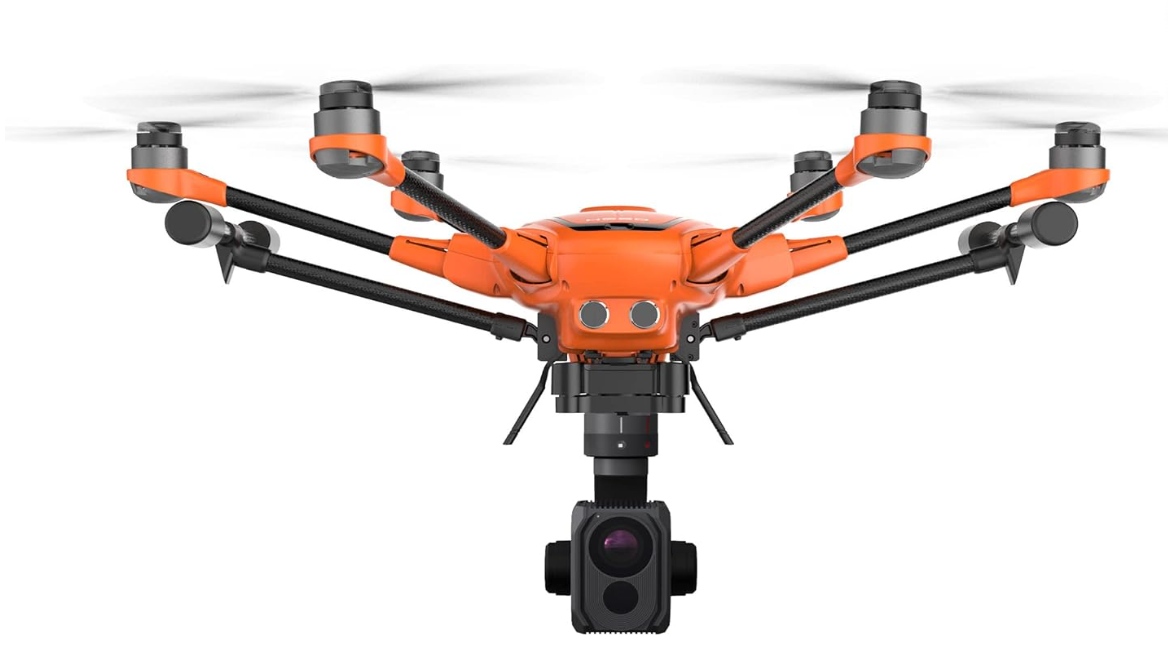
The best drone for night surveillance needs exceptional low-light imaging, reliable stabilization, long endurance, night or thermal vision, and pilot-first safety features so you don’t lose your asset in the dark.
This guide walks you through several real models carefully checked against maker specs so you can pick a machine that actually works after sundown.
At a glance, the drones in this article
- Potensic Atom 2
- Autel Robotics EVO II Dual 640T V3
- Walkera F210 Professional Deluxe Racer
- Bwine F7GIM Pro
- Parrot Anafi Thermal
- DJI Mavic 4 Pro 512GB Creator Combo.
Best Drone for Night Surveillance – Top Picks
1) Potensic Atom 2
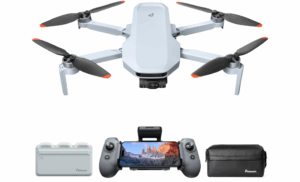
The Potensic Atom 2 is a tiny, lightweight (sub-250 g) camera drone engineered for portability and surprisingly good low-light imagery for its class.
It uses a 1/2-inch Sony-derived sensor that outputs 48MP stills and 4K HDR video at 30 fps, plus an 8K photo mode.
Potensic emphasizes an F1.8 aperture and pixel-binning / 4-in-1 pixel technology to boost low-light sensitivity, and the kit ships with a 3-axis gimbal for stabilized footage.
For night surveillance, this means the Atom 2 can capture cleaner, more usable imagery than many other sub-250 g drones; it also includes an “AI Night Mode” and several automated tracking modes, which help keep subjects framed in dim scenes.
At 32 mins, flight time is competitive for the weight class, and the PixSync transmission claims up to 10 km depending on the environment. The Atom 2 lacks high-end thermal sensors and advanced enterprise features, so it’s best suited for lightweight reconnaissance, perimeter checks, and situations where a stealthy, small platform is required rather than deep thermal analysis.
Pros
- Excellent visible-light stills for its weight class (48MP).
- Good low-light aperture
- AI Night Mode for improved night captures.
- Lightweight and travel-friendly
Cons
- No built-in thermal sensor.
- Lacks advanced obstacle avoidance.
2) Autel Robotics EVO II Dual 640T V3
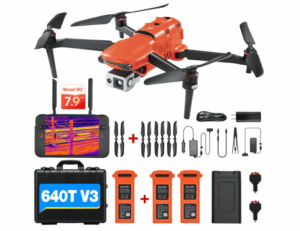
If you need to see in total darkness, then you’d rather invest in thermal vision. Autel’s EVO II Dual 640T V3 combines a high-resolution 640×512 thermal sensor with a high-resolution visible camera, yielding a platform ready for professional night surveillance tasks
The 640×512 thermal module provides strong thermal sensitivity and resolution for detecting heat signatures, people, vehicles, engines, or hotspots, while the visible camera gives complementary visual context and color imagery in low-light conditions.
The craft supports long flight endurance, at 38 minutes, redundant GNSS, and robust obstacle sensing and avoidance systems that matter when flying near obstacles at night.
Moreover, you get long-range transmission, multiple flight modes, and non-ITAR classification for export in some markets.
Pros
- Dedicated 640×512 thermal sensor
- Strong visible camera for contextual imaging.
- Long flight time and enterprise-level deployment features.
Cons
- Expensive and targeted at professional budgets.
3) Walkera F210 Professional Deluxe Racer Quadcopter
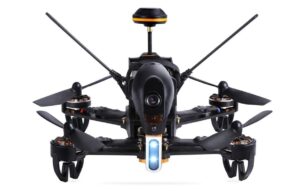
The Walkera F210 is a racing-style quadcopter built for agility and high maneuverability; it’s often sold in “deluxe” kits that include FPV goggles and a radio controller.
While not marketed as a night-surveillance drone per se, its fast motors and responsive control make it useful for close-range, tactical checks and confined-space inspections where speed and direct line-of-sight FPV control matter.
The F210 family uses brushless motors and expects 4S LiPo power for punchy acceleration; paired with a 700TVL night vision 5.8G video FPV camera and goggles, you can pilot aggressively through dark, obstacle-dense areas.
Keep in mind the onboard camera on many racing kits is optimized for latency and framing, not low-light dynamic range.
Also, racing drones typically lack the stability, gimballed imaging, and flight time of camera-first platforms, so they’re best used for short, reactive night missions where speed and pilot skill outweigh the need for cinematic video. For tactical night surveillance wanting a highly maneuverable eyeball, the F210 can be adapted effectively.
Pros
- Extremely agile and fast.
- Often packaged with FPV goggles and a radio controller for low-latency viewing.
- Durable and repairable after impacts.
Cons
- Shorter flight time
- No gimbal-mounted stabilized camera.
4) Bwine F7GIM Pro Drone
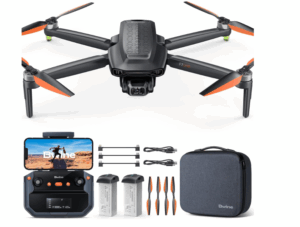
Bwine’s F7GIM Pro pitches itself as a professional, long-endurance aerial imaging platform. Specs from the maker advertise a 3-axis brushless gimbal, high-resolution imaging, and adapters for long flight times. Claims include up to 70 minutes total flight time when using multiple batteries in sequence.
The craft emphasizes long-range digital transmission and a stable gimbal to produce usable surveillance footage at night when ambient lighting or vehicle headlights exist.
For night surveillance, the F7GIM Pro’s advantages are endurance and a stabilized imaging stack; paired with the right low-light sensor or third-party low-lux lens options, it can perform extended perimeter and patrol missions. However, raw claims about extreme flight time and range should be treated carefully; they usually assume perfect conditions and averaged battery swaps.
Pros
- Good for extended perimeter patrols.
- 3-axis gimbal and pro imaging for stabilized night video.
- Solid transmission range for stand-off observation.
- Night mode for clear night videos
Cons
- Extreme flight-time claims depend on multiple batteries and ideal conditions.
5) Parrot Anafi Thermal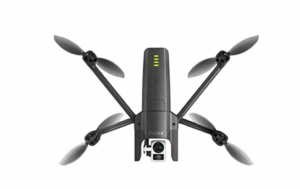
The Parrot Anafi Thermal is a compact and lightweight drone designed for professionals who need both visual and thermal imaging. Weighing around 315 grams, it features a 4K HDR camera with a 21-megapixel Sony sensor and a FLIR Lepton thermal sensor, allowing you to capture standard and heat-based images or combine both views. This makes it ideal for inspections, search and rescue, and building diagnostics.
It offers up to 26 minutes of flight time per battery, a top speed near 55 km/h, and wind resistance up to 50 km/h. The gimbal tilt lets the camera look straight up or down, useful for checking roofs or undersides of structures.
While it lacks obstacle-avoidance sensors and has a limited range in high-interference areas, its portability, solid imaging quality, and versatility make it a great value option for fieldwork and thermal imaging tasks.
Pros
- Decent thermal imaging at night
- Portable, foldable, and easy to carry for quick missions.
- Gimbal tilt flexibility.
Cons
- Lacks obstacle avoidance
6) DJI Mavic 4 Pro 512GB
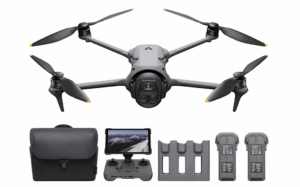
DJI’s Mavic 4 Pro is DJI’s flagship drone, with an available Creator Combo with 512GB storage. The combo represents the top-tier package that includes the RC Pro controller and multiple batteries.
This drone combines the highest possible visible imaging quality with best-in-class low-light performance and robust obstacle avoidance that helps keep the drone safe during low-visibility maneuvers.
The main sensor is a 100MP Hasselblad, in addition to tele cameras, a 360° rotating gimbal, and claimed night sensitivity down to extremely low lux of 0.1 lux. Moreover, there is an omnidirectional obstacle sensing and O4+ long-range transmission.
In many surveillance workflows, the Mavic 4 Pro can cover dusk-to-night visibility tasks exceptionally well; add the Creator Combo’s internal storage and pro controller, and you have a turnkey platform for long assignments, quick media offload, and serious imaging workflows.
Pros
- 100MP main camera, excellent low-light NightScape.
- Omnidirectional sensing
- 51-minute long flight endurance
- Creator Combo includes large internal storage and Pro Controller.
Cons
- Overkill for casual users.
What matters for night surveillance (Buying guide)
Sensor type
For night surveillance, the sensor is the single most important choice. Visible-light cameras rely on existing illumination, streetlights, vehicle headlights, and infrared spotlights, and excel at identifying colors and fine detail when there’s at least some light.
Thermal sensors detect heat signatures and work in complete darkness, through smoke, and sometimes through light foliage.
Choose thermal for certainty in darkness; choose high-sensitivity visible sensors for identification and documentation tasks.
Aperture, sensor size, and ISO capability
Imaging performance at night depends heavily on optics and sensor size. Larger sensors and wider apertures let in more light, improving image clarity at higher ISOs.
A good night-surveillance drone will use a physically larger sensor (1/2″, 1″, or larger) and fast optics to reduce noise and preserve detail in low-light scenes. Don’t just look at megapixels evaluate sensor design, pixel size, and whether the platform offers Night or Low-Light modes.
Stabilization (gimbal)
A stabilized gimbal is mandatory for usable nighttime footage. At higher ISO sensitivities and longer exposures, even micro jitters blur the scene.
A 3-axis mechanical gimbal maintains framing and lets the camera collect usable light across multiple frames. If you’re mounting a separate payload (like a 360 camera), ensure vibration isolation and a robust mount.
Thermal resolution and radiometric capability
In thermal systems, two things matter: resolution and whether the thermal is radiometric. Higher thermal resolution (e.g., 640×512 vs 320×240) yields clearer shapes and allows longer stand-off distances.
Radiometric thermal sensors record temperature values per pixel, enabling measurement and analysis. This is critical for industrial inspections, firefighting reconnaissance, and forensic evidence.
Flight time and mission endurance
Night missions often require longer loiter times for patrols or search patterns. Consider both single-flight battery endurance and rapid-battery-swap workflows.
Multi-battery kits and charging hubs reduce downtime. Also plan for flight time lost to hovering, winds, and pre-/post-maneuvers.
Transmission reliability and range
Good video transmission keeps your operator informed and safe. In complex urban or wooded environments, occlusion and interference diminish range. Look for robust digital transmission, plus fail-safes like RTH (return to home) and dual-band transmission if possible.
Obstacle sensing and autonomous features
At night, depth cues disappear. Omnidirectional obstacle sensing and robust autonomy reduce the risk of crashes. For urban or confined surveillance tasks, prioritise drones with multi-directional sensors and trustworthy avoidance algorithms.
Payload and upgradeability
If you foresee needing thermal later, choose a platform with payload flexibility or a vendor that offers thermal variants. For multi-sensor workflows, consider how easy it is to integrate or swap payloads and the weight implications for legal/regulatory categories.
Data encryption
Data from night surveillance is sensitive. Look for drones that support encrypted transmission, secure data storage, and easy export workflows. Enterprise pilots benefit from mission planning and logs for chain-of-custody; hobby users should at least verify file formats and storage quotas.
Regulations weight class
Weight affects registration and legal limits in many countries. Sub-250 g drones reduce regulatory friction but usually lack thermal capability.
If you need enterprise thermal or longer flight time, be prepared to manage registrations, possible waivers, and operational constraints, especially for night operations.
FAQs
Do I need a thermal drone for night surveillance?
If your surveillance must work in complete darkness no streetlights, no moon, no infrared illumination, then thermal imaging is strongly recommended.
Thermal sees heat signatures and work through darkness, smoke, light foliage, and some obscurants. Visible-light sensors can be excellent in low light but require at least some illumination.
Is it legal to fly drones at night?
Night flights are regulated in most jurisdictions; many countries require night-specific permissions, minimum lighting on the aircraft, training, or waivers. Regulations also often require a visual line of sight (VLOS) or a visual observer for night operations.
Always check local aviation authority rules and acquire required approvals; operating without them risks fines and safety incidents.
How do I improve a drone’s night footage?
Use larger-sensor cameras and wider apertures, raise ISO carefully, use longer exposure stabilization (via gimbals), and add controlled illumination when appropriate. For total darkness, integrate thermal sensors. Post-processing also helps, but capture quality is critical; don’t rely only on software fixes.
Can a racing drone be used for surveillance at night?
Racer drones offer speed and agility but typically lack stabilized gimbals, long flight time, and low-light cameras. They’re useful for tactical, short-range inspections or rapid response in confined spaces, particularly when piloted via FPV. For extended surveillance, a gimballed camera drone is preferable.
How important is obstacle sensing for night ops?
Extremely important. Depth perception and visual cues deteriorate at night, increasing collision risk. Multi-directional obstacle sensing and robust autonomous avoidance significantly reduce accident risk and protect sensitive payloads.
What’s the tradeoff between small drones and larger systems at night?
Sub-250g drones reduce regulatory burden and are highly portable, but they usually have smaller sensors, less battery capacity, and rarely include thermal imaging.
Larger systems afford bigger sensors, more payloads, longer flight time, and enterprise features, but they come with registration, higher cost, and more complex logistics.
How far can night-surveillance drones see?
Range depends on both the camera sensor and transmission system. Thermal cameras can detect heat signatures from hundreds of meters away, depending on resolution and lens type. Visible-light drones can record usable footage for similar distances, but clarity drops as light decreases.
What’s the difference between night vision and thermal imaging drones?
Night vision amplifies existing ambient light using sensitive sensors or infrared-assisted illumination. Thermal imaging, on the other hand, detects heat radiation and works even in complete darkness, fog, or smoke.
Night-vision drones show color or grayscale images, while thermal drones display heat maps, often using palettes like “white-hot” or “iron-bow” to highlight temperature differences.